
"colonial coffee planting"
2000 article(s) found

Which country was Sri Lanka's colony? which country is Ceylon black tea? which brand is good?
There are four major black tea producing countries in the world, namely, China, Darjeeling, Sri Lanka and Kenya. Today, let's talk about Sri Lanka. Sri Lanka is located in the Indian Ocean in the southeast of the Indian subcontinent and covers an area of 6.56 square kilometers. Sri Lanka was once a British colony. Before 1972, the country of Sri Lanka was called Ceylon.

When did the cultivation of Dutch coffee start? why are Dutch coffee beans rarely seen now?
For the exchange of professional baristas, please follow the coffee workshop (Wechat official account cafe_style). This time we will introduce the era when large-scale coffee cultivation began in European countries. How did the plantation of this colony begin? Coffee beans handled by European businessmen as coffee began to spread in many parts of Europe, businessmen resold coffee beans bought in Egypt to Europe.

The sixth History of European Culture on the Coffee Table Colonial Coffee Garden, a microcosm of cosmopolitanism
After 350 years of drinking a cup of coffee-colonial coffee gardens, a microcosm of cosmopolitanism, the coffee tasted by Europeans after the 17th century is no longer Arabian coffee beans from the East. When cafes quickly became popular in Europe, adventurous businessmen targeted the coffee trade, figuring out the huge profits behind growing and buying and selling coffee. The overseas of the old colonial empire of the Netherlands

Introduction to the planting Environment of Hope Manor Coffee varieties in Columbia Coffee producing area with pleasant Climate
In his letter from Jamaica in 1815, Bolivar envisioned that when South America was liberated from Spanish colonial rule, New Granada and Venezuela should form a country, named Colombia. In August 1819, Bolivar's Patriotic Army defeated the Spanish colonial army at the Battle of Boyaca and liberated Bogota. So, New Granada and Venezuela

Colonial Coffee Garden, a microcosm of cosmopolitanism
After the 17th century, the coffee tasted by Europeans is no longer Arabian coffee beans from the east. When cafes quickly became popular in Europe, adventurous businessmen targeted the coffee trade, figuring out the huge profits behind growing and buying and selling coffee. The overseas pioneers of the old colonial empire of the Netherlands, the East India Company and the West India Company, were the first to act, risking being sentenced.
World boutique Coffee Culture History Colonial Coffee Garden
After the 17th century, the coffee tasted by Europeans is no longer Arabian coffee beans from the east. When cafes quickly became popular in Europe, adventurous businessmen targeted the coffee trade, figuring out the huge profits behind growing and buying and selling coffee. The overseas pioneers of the old colonial empire of the Netherlands, the East India Company and the West India Company, were the first to act, risking being sentenced.

A microcosm of cosmopolitanism in colonial coffee gardens
After the 17th century, the coffee tasted by Europeans is no longer Arabian coffee beans from the east. When cafes quickly became popular in Europe, adventurous businessmen targeted the coffee trade, figuring out the huge profits behind growing and buying and selling coffee. The overseas pioneers of the old colonial empire of the Netherlands, the East India Company and the West India Company, were the first to act, risking being sentenced.

A microcosm of cosmopolitanism in colonial coffee gardens
After the 17th century, the coffee tasted by Europeans is no longer Arabian coffee beans from the east. When cafes quickly became popular in Europe, adventurous businessmen targeted the coffee trade, figuring out the huge profits behind growing and buying and selling coffee. The overseas pioneers of the old colonial empire of the Netherlands, the East India Company and the West India Company, were the first to act, risking being sentenced.

Indonesian coffee was grown in 1696 during the Dutch colonial period, and Arabica was planted in the early days.
Coffee workshop (Wechat official account cafe_style) Coffee was first grown in Indonesia during the Dutch colonial period in 1696, when Dutch colonists introduced Arabica coffee beans to Jakarta, the present-day capital of Indonesia, on the island of Java. With the continuous growth of coffee trade, coffee was grown from claws in the 18th century.

The characteristic planting Environment of Coffee Bean in Queen's Manor in Mojiana, Brazil
The characteristics of coffee beans in the Queen's Manor in Mojiana, Brazil. The Portuguese expedition established a colony in Brazil in the 1630s. The Governor was appointed in 1549. The entire colony was then United along the Atlantic coast under Portuguese rule. The French invaded in 1555 and occupied the equivalent of present-day Rio de Janeiro, intending to set up a French colonial stronghold in South America.

Puerto Rican Coffee Flavor with complete Flavor; introduction to the characteristics of boutique coffee beans in manor area
On September 23, 1869, the people of Puerto Rico were in R. Under the leadership of Emmetrio Betons, an uprising was held in the town of Larez (known as the voice of Larez in history), which declared the establishment of a republic on the 24th and was later suppressed by the Spanish colonial army. After a long struggle, Puerto Rico was finally granted local self-government by Spain. However, from then on, after the Spanish-American War, the island became an American colony, when
A microcosm of coffee culture colonization coffee garden cosmopolitanism
After 350 years of drinking a cup of coffee-colonial coffee gardens, a microcosm of cosmopolitanism, the coffee tasted by Europeans after the 17th century is no longer Arabian coffee beans from the East. When cafes quickly became popular in Europe, adventurous businessmen targeted the coffee trade, figuring out the huge profits behind growing and buying and selling coffee. The overseas of the old colonial empire of the Netherlands

A brief introduction to the Development History of Coffee Variety planting in Coffee Flavor production area of Santa Rita Manor, Colombia
Just as only wine produced in the champagne region of France can be called champagne, only coffee produced in Colombia and picked by hand can be called Colombian coffee. Colombian coffee is one of the few original coffee sold in the world under the name of the country. In terms of quality, it has won praise unmatched by other coffee. Today, Colombia is the third largest coffee producer in the world.

A brief introduction to the cultivation of Larez Yaoke boutique coffee beans with a long aftertaste, geographical location, climate and altitude
People here have been using an eco-friendly, intensive planting method, picking only fully ripe coffee beans and then flushing them in a drum device for 48 hours. Yaocote selected coffee beans are preserved with sheepskin before sale and will not be removed until order and delivery to ensure the best freshness of the coffee. At the time of the transaction, the relevant information of the United States government

New Caledonia (New Caledonia), where coffee is grown, is a former French colony
The glory that is gone. New Caledonia (NewCaledonia) is a former French colony, with only 10 per cent of the land available for farming, with coffee and corn as its main crops. Missionaries introduced coffee from LaRunion in 1860, but by 1987 only 40 tons were produced each year, of which 37 tons were exported, mostly to France. The variety of coffee beans is an extraordinary Robbins.

Columbia Coffee Manor with Pure Taste introduction to the Flavor of Hope Manor planting Environment
In 815, Bolivar envisioned in his letter from Jamaica that when South America was liberated from Spanish colonial rule, New Granada and Venezuela should form a country, named Colombia. In August 1819, Bolivar's Patriotic Army defeated the Spanish colonial army at the Battle of Boyaca and liberated Bogota. So, New Granada and Venezuela
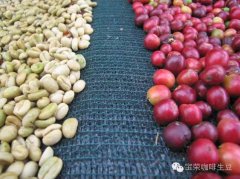
Two basic planting patterns of Colombian Coffee Fine Coffee with Colombian Flavor
After the news of Napoleon I's invasion of Spain in 1808 spread to Colombia, the people of that place immediately launched an independence movement. On July 20, 1810, a large-scale uprising against Spanish colonial rule broke out in Bogota and the Governor of New Granada was arrested. In November 1811, representatives from all over the world organized Congress in Bogota and established the New Granada Joint Provincial Government, which was announced on November 11.

Laresco Coffee Flavors Laresco Coffee Features
Puerto Rico was originally inhabited by the Indian Taino tribe. Christopher Columbus sailed here in November 1493 and named it San Juan in honor of John the Baptist. In 1508 the Spaniard J. Ponce de Leon established a colony on the island and was appointed governor the following year. It became a Spanish colony in 1509. The original island.

Coffee boutique Columbia Santa Rita Manor Coffee Flavor and taste description A brief introduction to the planting situation
Originally under the jurisdiction of the Governor of Peru, the Spanish royal family established the Governor of New Granada in Bogota in 1718 and was directly ruled by the Governor. Under the Spanish colonial rule, the Indians were brutally exploited and the native whites were squeezed. Indians continue to revolt, and native-born whites revolt in 1781. Colombia, in northwest South America, is a beautiful country.

Taste characteristics of manors in Colombian coffee flavor producing areas introduction of fine coffee beans
In 1501, the Spaniard R.de Bastidas first reached the northern coast of Colombia and founded the city of Santa Marta in 1525. In 1533, P.de Eredia established Cartagena. In 1535, G. Simone de Xada led the Spanish colonial army into the interior of Colombia, conquered the Chibucha, established the city of Bogota, and Colombia became a Spanish colony. At the beginning